Weather Alert in Ohio
Snow Squall Warning issued February 6 at 9:49PM EST until February 6 at 10:15PM EST by NWS Pittsburgh PA
AREAS AFFECTED: Jefferson, OH; Allegheny, PA; Armstrong, PA; Beaver, PA; Butler, PA; Indiana, PA; Washington, PA; Westmoreland, PA; Brooke, WV; Hancock, WV
DESCRIPTION: At 949 PM EST, a hazardous snow squall was located along a line from 10 miles northwest of Blairsville to over Wintersville, or along a line from 10 miles west of Homer City to 5 miles west of Steubenville, moving south at 35 mph. HAZARD...Intense bursts of heavy snow and gusty winds leading to blowing snow and rapidly falling visibility. Wind gusts up to 35 mph. SOURCE...Radar indicated. IMPACT...Travel will become difficult and potentially hazardous within minutes. Locations impacted include... Pittsburgh, Penn Hills, Mount Lebanon, Bethel Park, Ross Township, McCandless Township, Monroeville, Cranberry, Moon Township, Weirton, McKeesport, Steubenville, Butler, Franklin Park, East Liverpool, Aliquippa, Beaver Falls, Monaca, Vandergrift and Kittanning. This includes the following highways... Parkway North between mile markers 1 and 13. Interstate 79 in Pennsylvania between mile markers 52 and 90. Interstate 376 between mile markers 31 and 84. Pennsylvania Turnpike between mile markers 17 and 63.
INSTRUCTION: Slow Down! Rapid changes in visibility and road conditions are expected with this dangerous snow squall. Be alert for sudden whiteout conditions. Reduce your speed and turn on headlights! During snow squalls, the visibility may suddenly drop to near zero in whiteout conditions.
Want more detail? Get the Complete 7 Day and Night Detailed Forecast!
Current U.S. National Radar--Current
The Current National Weather Radar is shown below with a UTC Time (subtract 5 hours from UTC to get Eastern Time).

National Weather Forecast--Current
The Current National Weather Forecast and National Weather Map are shown below.

National Weather Forecast for Tomorrow
Tomorrow National Weather Forecast and Tomorrow National Weather Map are show below.

North America Water Vapor (Moisture)
This map shows recent moisture content over North America. Bright and colored areas show high moisture (ie, clouds); brown indicates very little moisture present; black indicates no moisture.

Weather Topic: What are Wall Clouds?
Home - Education - Cloud Types - Wall Clouds
 Next Topic: Altocumulus Clouds
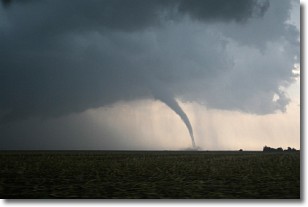
A wall cloud forms underneath the base of a cumulonimbus cloud,
and can be a hotbed for deadly tornadoes.
Wall clouds are formed by air flowing into the cumulonimbus clouds, which can
result in the wall cloud descending from the base of the cumulonimbus cloud, or
rising fractus clouds which join to the base of the storm cloud as the wall cloud
takes shape.
Wall clouds can be very large, and in the Northern Hemisphere they generally
form at the southern edge of cumulonimbus clouds.
Next Topic: Altocumulus Clouds
Weather Topic: What are Altostratus Clouds?
Home - Education - Cloud Types - Altostratus Clouds
 Next Topic: Cirrocumulus Clouds
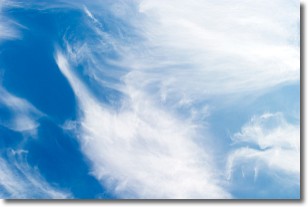
Altostratus clouds form at mid to high-level altitudes
(between 2 and 7 km) and are created by a warm, stable air mass which causes
water vapor
to condense as it rise through the atmosphere. Usually altostratus clouds are
featureless sheets characterized by a uniform color.
In some cases, wind punching through the cloud formation may give it a waved
appearance, called altostratus undulatus. Altostratus clouds
are commonly seen with other cloud formations accompanying them.
Next Topic: Cirrocumulus Clouds
Current conditions powered by WeatherAPI.com