Weather Alert in Colorado
Fire Weather Watch issued February 14 at 2:36AM MST until February 16 at 6:00PM MST by NWS Denver CO
AREAS AFFECTED: North and Northeast Elbert County Below 6000 Feet/North Lincoln County; Washington County
DESCRIPTION: ...PROLONGED PERIOD OF CRITICAL FIRE WEATHER CONDITIONS SUNDAY THROUGH MID NEXT WEEK... ...EXTREME FIRE WEATHER CONDITIONS POSSIBLE TUESDAY... .Recent dry conditions combining with above normal temperatures and pockets of gusty winds will bring potentially critical fire weather conditions Sunday and Monday to parts of the eastern Colorado Plains. Strong west winds are expected to develop Tuesday, possibly producing extreme fire weather conditions with widespread strong and gusty winds to 60 mph. ...FIRE WEATHER WATCH REMAINS IN EFFECT FROM MONDAY MORNING THROUGH MONDAY AFTERNOON FOR WIND AND LOW RELATIVE HUMIDITY FOR WASHINGTON AND LINCOLN COUNTIES... ...FIRE WEATHER WATCH REMAINS IN EFFECT FROM TUESDAY MORNING THROUGH TUESDAY EVENING FOR WIND AND LOW RELATIVE HUMIDITY FOR WASHINGTON AND LINCOLN COUNTIES... The National Weather Service in Denver has issued a Fire Weather Watch for wind and low relative humidity, which is in effect from Sunday morning through Sunday afternoon. * AFFECTED AREA...Fire Weather Zones 246 and 249. * TIMING...For the first Fire Weather Watch, from Sunday morning through Sunday afternoon. For the second Fire Weather Watch, from Monday morning through Monday afternoon. For the third Fire Weather Watch, from Tuesday morning through Tuesday evening. * WINDS...Southwest winds to 10 to 20 mph with gusts to 30 Sunday and Monday. On Tuesday, winds increase with west winds 30 to 40 mph with gusts up to 60 mph. * RELATIVE HUMIDITY...10 to 15 percent each day. Possibly as low as 5 to 10 percent Tuesday. * IMPACTS...Conditions will be favorable for rapid fire spread. Avoid outdoor burning and any activity that may produce a spark and start a wildfire.
INSTRUCTION: A Fire Weather Watch means that critical fire weather conditions are forecast to occur. Listen for later forecasts and possible Red Flag Warnings.
Want more detail? Get the Complete 7 Day and Night Detailed Forecast!
Current U.S. National Radar--Current
The Current National Weather Radar is shown below with a UTC Time (subtract 5 hours from UTC to get Eastern Time).

National Weather Forecast--Current
The Current National Weather Forecast and National Weather Map are shown below.

National Weather Forecast for Tomorrow
Tomorrow National Weather Forecast and Tomorrow National Weather Map are show below.

North America Water Vapor (Moisture)
This map shows recent moisture content over North America. Bright and colored areas show high moisture (ie, clouds); brown indicates very little moisture present; black indicates no moisture.

Weather Topic: What are Nimbostratus Clouds?
Home - Education - Cloud Types - Nimbostratus Clouds
 Next Topic: Precipitation
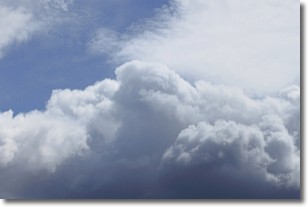
A nimbostratus cloud is similar to a stratus cloud in its formless,
smooth appearance. However, a nimbostratus cloud is darker than a stratus cloud,
because it is thicker.
Unlike a stratus cloud, a nimbostratus cloud typically brings with it the threat
of moderate to heavy precipitation. In some cases, the precipitation may evaporate
before reaching the ground, a phenomenon known as virga.
Next Topic: Precipitation
Weather Topic: What is Rain?
Home - Education - Precipitation - Rain
 Next Topic: Shelf Clouds
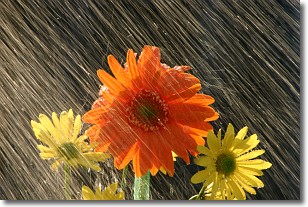
Precipitation in the form of water droplets is called rain.
Rain generally has a tendency to fall with less intensity over a greater period
of time, and when rainfall is more severe it is usually less sustained.
Rain is the most common form of precipitation and happens with greater frequency
depending on the season and regional influences. Cities have been shown to have
an observable effect on rainfall, due to an effect called the urban heat island.
Compared to upwind, monthly rainfall between twenty and forty miles downwind of
cities is 30% greater.
Next Topic: Shelf Clouds
Current conditions powered by WeatherAPI.com