Weather Alert in New Mexico
Fire Weather Watch issued March 14 at 1:42AM CDT until March 15 at 9:00PM CDT by NWS Midland/Odessa TX
AREAS AFFECTED: Sacramento Foothills and Guadalupe Mountains; Chaves County Plains; Eddy Plains; Lea; Gaines; Dawson; Borden; Scurry; Andrews; Martin; Howard; Mitchell; Loving; Winkler; Ector; Midland; Glasscock; Ward; Crane; Upton; Reagan; Pecos; Terrell; Guadalupe Mountains Above 7000 Feet; Guadalupe and Delaware Mountains; Van Horn and Highway 54 Corridor; Eastern Culberson County; Reeves County Plains; Chinati Mountains; Marfa Plateau; Davis Mountains; Davis Mountains Foothills; Central Brewster County; Chisos Basin; Presidio Valley; Lower Brewster County
DESCRIPTION: ...FIRE WEATHER WATCH IN EFFECT FROM 12 PM CDT /11 AM MDT/ TO 9 PM CDT /8 PM MDT/ SUNDAY FOR LOW RELATIVE HUMIDITY BELOW 15 PERCENT, 20 FOOT WINDS AROUND 20 MPH OR GREATER, AND HIGH FIRE DANGER FOR SOUTHEAST NEW MEXICO AND WEST TEXAS... The National Weather Service in Midland/Odessa has issued a Fire Weather Watch for wind and low relative humidity, which is in effect from Sunday afternoon through Sunday evening. * WINDS...Westerly to northwesterly 25 to 35 mph with gusts 45 to 55 mph, with stronger sustained winds and gusts for the higher terrain. * RELATIVE HUMIDITY...As low as 5 percent. * RFTI...7 to 8 or extreme. * IMPACTS...Any fires that develop will likely spread rapidly. Outdoor burning is not recommended. * SEVERITY... FUELS (ERC)...70th-89th percentile...4 (out of 5). WEATHER...Extreme...4 (out of 5). FIRE ENVIRONMENT...8 (out of 10).
INSTRUCTION: A Fire Weather Watch means that critical fire weather conditions are forecast to occur. Listen for later forecasts and possible Red Flag Warnings.
Want more detail? Get the Complete 7 Day and Night Detailed Forecast!
Current U.S. National Radar--Current
The Current National Weather Radar is shown below with a UTC Time (subtract 5 hours from UTC to get Eastern Time).

National Weather Forecast--Current
The Current National Weather Forecast and National Weather Map are shown below.

National Weather Forecast for Tomorrow
Tomorrow National Weather Forecast and Tomorrow National Weather Map are show below.

North America Water Vapor (Moisture)
This map shows recent moisture content over North America. Bright and colored areas show high moisture (ie, clouds); brown indicates very little moisture present; black indicates no moisture.

Weather Topic: What are Contrails?
Home - Education - Cloud Types - Contrails
 Next Topic: Cumulonimbus Clouds
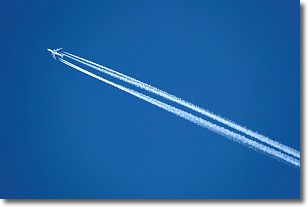
A contrail is an artificial cloud, created by the passing of an
aircraft.
Contrails form because water vapor in the exhaust of aircraft engines is suspended
in the air under certain temperatures and humidity conditions. These contrails
are called exhaust contrails.
Another type of contrail can form due to a temporary reduction in air pressure
moving over the plane's surface, causing condensation.
These are called aerodynamic contrails.
When you can see your breath on a cold day, it is also because of condensation.
The reason contrails last longer than the condensation from your breath is
because the water in contrails freezes into ice particles.
Next Topic: Cumulonimbus Clouds
Weather Topic: What are Cumulus Clouds?
Home - Education - Cloud Types - Cumulus Clouds
 Next Topic: Drizzle
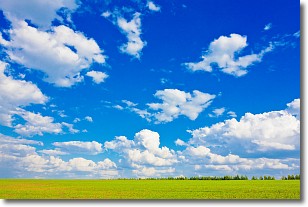
Cumulus clouds are fluffy and textured with rounded tops, and
may have flat bottoms. The border of a cumulus cloud
is clearly defined, and can have the appearance of cotton or cauliflower.
Cumulus clouds form at low altitudes (rarely above 2 km) but can grow very tall,
becoming cumulus congestus and possibly the even taller cumulonimbus clouds.
When cumulus clouds become taller, they have a greater chance of producing precipitation.
Next Topic: Drizzle
Current conditions powered by WeatherAPI.com