Weather Alert in Louisiana
Dense Fog Advisory issued February 13 at 7:55PM CST until February 14 at 10:00AM CST by NWS Lake Charles LA
AREAS AFFECTED: Vernon; Rapides; Avoyelles; Beauregard; Allen; Evangeline; St. Landry; Lafayette; Upper St. Martin; Lower St. Martin; West Cameron; East Cameron; Northern Calcasieu; Northern Jefferson Davis; Northern Acadia; Upper Vermilion; Upper Iberia; Upper St. Mary; Southern Calcasieu; Southern Jefferson Davis; Southern Acadia; Lower Vermilion; Lower Iberia; Lower St. Mary; Tyler; Hardin; Northern Jasper; Northern Newton; Southern Jasper; Southern Newton; Upper Jefferson; Northern Orange; Lower Jefferson; Southern Orange
DESCRIPTION: * WHAT...Visibility one quarter mile or less in dense fog. * WHERE...Portions of central, south central, southwest, and west central Louisiana and southeast Texas. * WHEN...Until 10 AM CST Saturday. * IMPACTS...Low visibility could make driving conditions hazardous.
INSTRUCTION: If driving, slow down, use your headlights, and leave plenty of distance ahead of you.
Want more detail? Get the Complete 7 Day and Night Detailed Forecast!
Current U.S. National Radar--Current
The Current National Weather Radar is shown below with a UTC Time (subtract 5 hours from UTC to get Eastern Time).

National Weather Forecast--Current
The Current National Weather Forecast and National Weather Map are shown below.

National Weather Forecast for Tomorrow
Tomorrow National Weather Forecast and Tomorrow National Weather Map are show below.

North America Water Vapor (Moisture)
This map shows recent moisture content over North America. Bright and colored areas show high moisture (ie, clouds); brown indicates very little moisture present; black indicates no moisture.

Weather Topic: What are Cumulus Clouds?
Home - Education - Cloud Types - Cumulus Clouds
 Next Topic: Drizzle
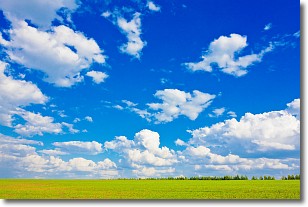
Cumulus clouds are fluffy and textured with rounded tops, and
may have flat bottoms. The border of a cumulus cloud
is clearly defined, and can have the appearance of cotton or cauliflower.
Cumulus clouds form at low altitudes (rarely above 2 km) but can grow very tall,
becoming cumulus congestus and possibly the even taller cumulonimbus clouds.
When cumulus clouds become taller, they have a greater chance of producing precipitation.
Next Topic: Drizzle
Weather Topic: What is Evaporation?
Home - Education - Precipitation - Evaporation
 Next Topic: Fog
Evaporation is the process which returns water from the earth
back to the atmosphere, and is another crucial process in the water cycle.
Evaporation is the transformation of liquid into gas, and it happens because
molecules are excited by the application of energy and turn into vapor.
In order for water to evaporate it has to be on the surface of a body of water.
Next Topic: Fog
Current conditions powered by WeatherAPI.com